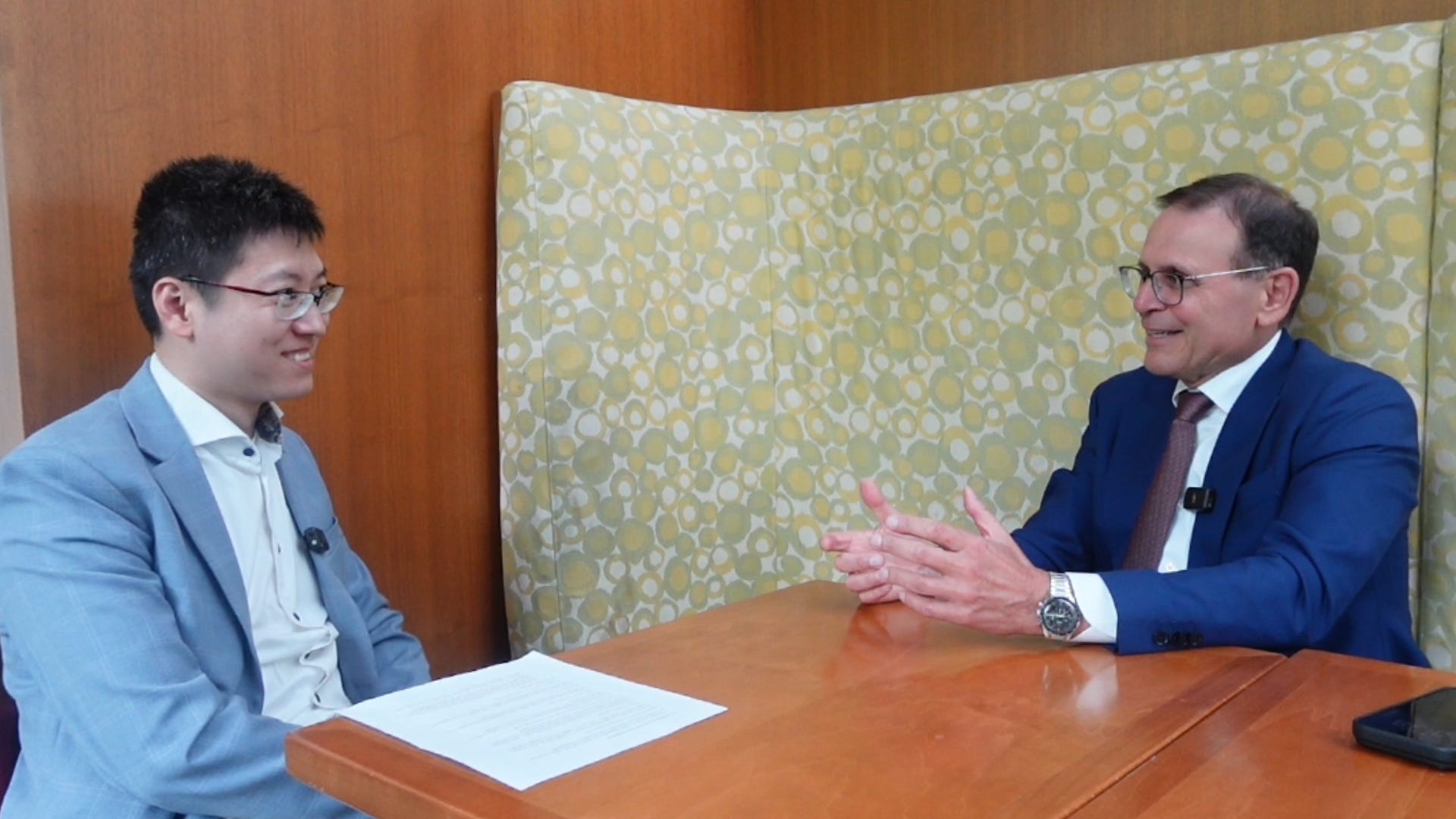
An Exclusive Interview with Senator Leo Housakos, Leader of the Opposition in the Canadian Senate 專訪加拿大參議院反對黨領袖胡薩科斯參議員
公子訪談
中文譯文在最下方
Q: Thank you, Senator Housakos, for taking this time. Senator, you led a Senate delegation to Taiwan just last month. What did you see there that you don’t think most Canadians understand?
A: A wonderful country, a wonderful democracy, a wonderful people, an island of 24 million people who have built a wonderful economy, a wonderful society. Canadians, we’re very fortunate in some ways, because we’re isolated in the world. I always say that God has given Canada four gifts. We’re bordered by three oceans and the United States of America, one of the great free democratic states. But there’s many countries in the world that don’t have that luxury. They don’t have the luxury to be bordered next to countries that have the same values, the same principles, the same system of government. There’s many places in the world that are confronted on a daily basis by tyranny, by authoritarianism, and they have to fight on a daily basis to defend their democracy.
I had been to Taiwan before; from my other eight colleagues, it was their first trip. And I think it was eye-opening for them to see what Taiwan is all about, because it’s one thing to read about it in the newspapers, it’s another thing to visit it on the ground. And we had many meetings. We had meetings with the Ministry of Security, Foreign Affairs, Health, Environment, Agriculture. We were fortunate to have a long discussion with the Vice President, where she got to put on the table the concerns of the people in the government of Taiwan. And of course, we as parliamentarians benefited a lot by understanding the complexity of the geopolitical crisis that Taiwan is facing, being next door to what I consider the world’s most flagrant authoritarian regime.
Q: When we are talking here, the conservative MP Michael Chong is right now in Taiwan. And China seems very unhappy about that. What’s your view on that?
A: Well, look, my view is I don’t care what China is. At the end of the day, we’ve been unhappy with the behavior of Beijing towards Taiwan, towards our democracy, towards our friends and allies around the world. This is, let’s be clear here, this is a regime that engages in intellectual espionage, transnational repression of Canadians of Chinese descent that live in this country, who tell them what to think, how to vote, what to do. That’s not who we are in Canada. We’re a free society. We value our democracy. And you know what, Terence, you were born in Beijing. My parents immigrated to Canada from Greece back in the 1950s. It doesn’t matter in Canada where you come from. It’s where we go as a collectivity. But we all value our freedom, our democracy, our right to say what we want to say. And if we want to criticize our government, it’s our right to criticize. If we want to applaud and compliment decisions of our government, it’s our right to do so. What we’re doing here is having an exchange on geopolitical issues. We have the right to do it freely.
So at the end of the day, when we have a leader, a parliamentarian, elected parliamentarian from Canada, Michael Chong, that goes to Beijing with a delegation of parliamentarians, it’s not up to the Beijing regime to tell us what to do or what not to do. If we want to support Taiwan because we agree with their values, with their principles, if we want to defend democracy against authoritarianism, it’s Michael Chong’s constitutional right in this country. That’s what distinguishes Taiwan, Canada, and China. In Taiwan, in Canada, you can say what you think. You can think what you say. That’s a right that we sometimes take for granted. In Canada, not too long ago, people lost their lives fighting for that democratic right.
Q: When you talk to Canadians, especially the people who have never thought about Taiwan in their lives, how do you explain why this matters to them?
A: Many things. Like I said earlier, Canada is a little bit isolated from the world. So I was privileged enough to go now to Taiwan on two occasions and see what was going on. So I’m a little bit of a conduit. I’m able to go back to the people of my constituency in the province of Quebec, Montreal. Today, we’re in Toronto. And I firsthand can talk about how Taiwan is a great democracy, how that small little island with a small population of people with freedom and democracy and respect for international rule of law have built a wonderful economy, a world leader in semiconductors, but not just semiconductors. We all talk about semiconductors because they’re so important in today’s technological world. But Taiwan has become a leader in so many aspects. And they’ve grown that economy. And they’re becoming an important part of our supply chain here in Canada, the United States and in Europe.
And the message I have for Canadians: we have spent far too many years economically engaging with Beijing. And that relationship has brought us what? Beijing sells Canada over $60 billion a year of goods. We sell back to Beijing $30 billion. You don’t have to be a brilliant businessman to see the inequity in that relationship. Over just a decade, China has benefited by over $300 billion of a trade deficit at the expense of our Canadian economy. Furthermore, they arrest Canadian citizens with no due process. Furthermore, they have no respect for environmental policy. Furthermore, they have no standards when it comes to labor policy. Furthermore, they devalue their currency compared to what we do here in Canada, the United States and in the free Western world. Where we believe in trade being based on standards — environmental standards, labor standards, financial standards, international rule of law, justice — where you don’t charge somebody like they did with the two Michaels on trumped up charges, just in order to reciprocate legitimate charges that one of the Huawei executives were facing here in Canada and the United States.
Beijing has been a rogue authoritarian regime with one objective, and that is to grow their empire. What we want to do in Canada doesn’t matter, like I said, as a Canadian where we come from, is we want to create a just society, a free country where rights are rights, and more importantly, grow our economy. But grow it not at the expense of our environment, not at the expense of slave labor, not at the expense of taking away religious rights from people.
So when I went to Taiwan, it was refreshing to see Chinese people living in freedom and flourishing. You know what struck me? Because many years ago, I had the opportunity to visit mainland China. And what I saw when I visited Taiwan are culturally the same people, but with a different spirit. The biggest thing I saw is the spirit in Taiwan is free, innovative, dynamic, warm and open. And happy. Ultimately, when you have all those elements as a human being, you live happy. Nothing beats freedom, innovation, right? And when I went to mainland China, I saw a boot at the throat of people. I saw insularism — when people were insular, they wouldn’t express themselves. You just sensed it was palpable, the lack of freedom in mainland China, how everything was rigid.
Q: You’ve spoken on the Senate floor about the two Michaels. You just mentioned about the election interference, about the Chinese police stations operating on Canadian soil. So when you connect those dots, what’s the picture you see?
A: Well, the picture I see is something very, very nefarious and dangerous for our Canadian government, Canadian institutions, and our Canadian people, regardless of what community they come from. But number one, I’m very concerned as a parliamentarian about our Chinese Canadian community that’s being intimidated right here on Canadian land and soil. Mainland Chinese that have fled mainland China and want to come to Canada and do their business here and they want to do it in peace. And for a variety of reasons, somehow the Chinese state considers these people their assets. They’re not assets. Canadians are Canadians. Doesn’t matter, like I said, if you have Chinese background — I’m of Greek background. Many Canadians come from all over the world. Others are French Canadian. Doesn’t matter. We all came to Canada wanting to receive the promise of Canada: freedom, democracy, opportunity.
So when we see a situation where two Canadian citizens got illegally imprisoned in the most brutal way and were held as a negotiating chip, as leverage, that is beyond unacceptable. Beyond unacceptable.
Q: You know, I have some relatives visiting me in Toronto. And when they learn I’m doing what I’m doing right now and they are really concerned, they say, you should be less critical of the Chinese government, because they fear that one day if I go back, I will be in trouble. Or maybe even here in Canada, I will be in trouble. That’s the fear they have.
A: Terrible. Can you imagine living in that state where everything you say and think will be determined by trying to please your government? What Canadian for a second would find that normal?
I’m a parliamentarian. I’m in the Senate of Canada. My job is to hold the government to account. If every time I open my mouth, I worry about upsetting Prime Minister Carney — what kind of a country do we live in? And thank God we have leaders like Prime Minister Carney. And before him, other prime ministers. I had the privilege of working under Prime Minister Stephen Harper, who always said the job of a parliamentarian is to represent their people. Nobody else. And when you apply to be prime minister of Canada, you know what comes with that job is criticism. And criticism is an important part in democracy of arriving at the best possible public positions.
So I just find it unacceptable what’s going on in Beijing. It’s been going on for decades. They do not share our values. So my biggest concern, and why many say, why are you such an anti-Beijing advocate? And it’s very simple. I don’t want to be trading or dealing with a group of individuals that are not aligned on my values, my values of free enterprise. Free enterprise doesn’t mean capitalism under authoritarian control. Free enterprise means capitalism under freedom, where there’s competition, where if you manufacture product A, somebody else has the right to manufacture product A. And there’s competition to make the best product at the most competitive price. That’s free enterprise. Free enterprise and doing trade with an ally. I want to trade with an ally who cares as much about the environment as we Canadians do.
If we combine the CO2 emissions and the pollutants that come out of the United States, Canada, the EU and Australia, Beijing produces more than two times the amount of CO2 pollutants than all those economies combined. Yet, we’ve allowed Beijing to get rich by having unfettered access and open market to the richest middle class Western democratic markets — North America, EU and Australia. And I ask myself, why? Why are we doing business with a country that doesn’t respect environmental laws, doesn’t respect labor laws, doesn’t have a free and just system of justice? Why do we deal with that country? No respect for international rule of law.
And then you have little Taiwan, small little island right off the coast, which Beijing on a daily basis intimidates. And they have democracy. They have environmental policies similar to ours. They have labor laws. They have freedom of expression, respect for international rule of law. Why aren’t we dealing more with a country like that instead of being intimidated by Beijing and their various conditions? We have MPs delegations going to Taiwan and they get upset. I say that we should have Taiwan recognized by the World Health Organization. Beijing gets upset. Worry about your business. Let Taiwan worry about its business. Let Canada worry about its business. And let’s worry about aligning ourselves on public policy and values so everything can work nicely.
Q: I just want to say that if Taiwan falls — of course, we don’t want that to happen — and if Beijing achieves what it says it wants, what does that mean for Canada, for Canadian sovereignty, Canadian business, and the Canadian citizens?
A: It means terrible things. Number one, we will have a dictatorship that will become more emboldened than ever before. If that ever happens, which is the worst case scenario, it will never happen. But let’s assume — I’ll assume the question being legitimate, but it’s a terrible hypothesis. It’ll be a big blow for democracy. It’ll be a huge blow for economies of the world because today Taiwan is a key component in our supply chain in terms of semiconductor technology. That is at the core of everything we do in terms of microchips, what we produce in every sector imaginable. So the impact would be catastrophic for Canada, catastrophic for North America, catastrophic for the Western economic world. Not to mention that I think if that would happen, it brings into question the security of the whole Asia-Pacific democratic countries — South Korea, Japan, all of them. Like, if Taiwan falls, who’s next?
And I keep telling our Canadian friends, democracy is our number one asset in Canada. We have to protect it at all costs. That includes our economy, our political institutions, and our citizens and their rights. And this belief that what’s happening in the Middle East or Ukraine or Taiwan is so far away is wrong, because today it’s a distance away. But tomorrow, we’ve learned from the history of mankind that these dictatorships, they never stop. Hitler didn’t stop at Poland, right? The Soviet Union showed that they didn’t want to stop at a particular point. Expansionism is expansionism. And dictators always want to expand.
Q: You remind me of a reason that President Trump said that Taiwan is too far and is too small when he was flying back from Beijing. What’s your take on that?
A: But that’s not true. If Taiwan is too far away, what about Iran? Taiwan is not far away. Like I said, what Taiwan builds and what Taiwan trades and what Taiwan has, we have it in our cars. We have it in our cell phones. We have it in our computers. We have it in our every component imaginable, air conditioning systems in this country. Every aspect. Taiwan, not only is it everywhere, it is omnipresent in our society. What I’m saying is we need more of Taiwan in North America and we need less of Beijing.
Beijing is a tyrant. Beijing is like dealing with the mafia. They come, they give you something because they want 10 things in return. It’s not a fair relationship. And when you deal with the mafia, you never, ever survive. They will kill you and take what you have. That is the way Beijing works. Every time we’ve seen it in trade negotiations, in technological exchanges — when’s the last time that Beijing developed a piece of technology that they gave to Canada? It’s like, here, take it. Remember a company? You’re too young, Terence. But there was a company in Canada called Nortel. Nortel was the world leader in telecommunication. We know today after the fact that Beijing came in, they used espionage and other illicit forms, and they siphoned out the technology to the point where they killed the company. China engages on a daily basis in intellectual property thievery. It doesn’t matter if it’s technology and so on and so forth. We’ve seen it all over the world. It’s part of their policy. The United Front, they invest billions of dollars in places like Canada, United States, Europe in order to infiltrate our democracies in terms of institutions. Our own parliamentary systems have been infiltrated by Beijing. They’re not infiltrating us because they want to keep an eye on us. Because if you want to keep an eye on our democracies, all you got to do is read the news because we have free media. And we have now even better than free media. We have outlets like yourselves with millions of followers all over the world that are standing here and having a free conversation, like two individuals, Canadian citizens, and we’re not afraid to broach any subject matter.
So you put all those facts on the table. Canadians should be very concerned. We need to wake up. Not about the threats of China — because if Canadians are not aware today, that means they’ve been sleeping on the switch. It’s nice to go to the dollar store and to buy things made in China that are cheap, but you got to ask yourself the question, at what expense? In Canada, we have essentially exported our Canadian economy over the last 50 years to China, in exchange for what? Some cheaper goods? A trade imbalance, like I said, which is in the favor of Beijing, and the hundreds of billions of dollars. And in exchange, the thank you we get is they come to our land, they intimidate Canadian citizens, they engage in espionage, they threaten Canadian politicians when we want to deal with free democratic states. Unacceptable.
Q: You are so right. They don’t really just monitor you. They want to control you. Not only in China, they want to control people — they even want to control people around the world. And what’s even worse is Canadian entrepreneurs and companies for decades have been going to China. What’s your view on that?
A: Let’s be clear, and I’m repeating this because it’s worth repeating for your audience to know. When North American business people go to China, they go there because they want to break environmental laws they can’t break here. They want to break labor laws they can’t break here. And they think if you break all these laws and you cut all these corners, you’re going to make more profits. Maybe you will. But what they don’t understand is the government in Beijing wants the relationship to be one-sided. And when they utilize your technology, they take access of your marketplace, they’ll ask you to leave. And when they ask you to leave, your pockets are going to be more empty than what they were when you came in there to start your business.
Q: You came back from Taipei six weeks ago, and if you could put one message in front of every Canadian about Taiwan, what would that be?
A: Like I said at the outset of this interview, great people, innovative, free, creative, warm, happy, generous. They want to be part of our Western democratic incubator. Democracy is a relatively new idea. It started in my parents’ homeland in Greece thousands of years ago. And it has had peaks and valleys. And democracy is at a precarious stage. We’ve had authoritarianism and dictatorships flourish in the world and the history of mankind far more than democracy has. We’ve had instances where democracy didn’t exist in any form for centuries in this world.
So the message I have to all of us that live in free and democratic states — and if you look at the membership of the United Nations, we’re very few countries — we shouldn’t close our eyes and bury our heads in the sand and pretend dictatorships are a faraway problem. Because that problem can easily come. So the message I have for Canadians is Taiwan is free, democratic, has a system of law and justice, and it deserves our defense against any authoritarianism, because like I said, in the history of mankind, authoritarianism has proven to be like cancer. It spreads, right? If you don’t eradicate the cancer at its source, it’ll eat up your whole body. And that’s what authoritarianism is. That’s what Iran is. That’s what Beijing is. All these countries that don’t have true freedom, they intimidate the media. They intimidate their opposition like Russia, like Erdogan in Turkey does very often. And it’s funny, who does Beijing cooperate with? These are the countries they cooperate with — countries that sponsor terrorism, countries that are against democracy and against freedom. They support Cuba. They support Russia. These are the countries they support.
Q: I’m very excited to take some of the Canadian journalists to the Kinmen front line to face China. That’s going to be very exciting.
A: And hopefully Canadian journalists will expand on the miracle — I call it the economic, political miracle of Taiwan — and give the information required so Canadians can know what’s going on around the world. Being educated and knowledgeable makes you put things in perspective, both in your country and around the world.
Q: Now Taiwan is one of the top trading partners with Canada. And Taiwan is willing to sign a free trade deal with Canada and all other nations. What’s stopping Canada from doing that?
A: Well, clearly, look, I agree with Prime Minister Carney — we need to diversify our trade. We’re in the middle of a skirmish right now with our American friends and Donald Trump over tariffs and free trade and so on and so forth. But Canadians have to never forget the amount of trade we do with our best friend and ally, the United States, can never be compensated by any amount of diversification. Not with Indonesia, not with Middle Eastern countries, but certainly not with China. There’s no amount of trade with China that can create equilibrium of cutting ties with the United States of America. So Mark Carney, Prime Minister Carney and the Liberals have to get over this.
And number two, for all the reasons we highlighted in our conversation today, we need to send the message clearly to China: if you don’t align yourself with the standards that we have on freedom, on environmental issues, on labor — like all the list, I’m repeating it because it’s worth repeating — we need to cut ties with China. And we need to cut ties completely. Because ultimately, China’s always leveraging our dependency on their supply chain. And they’re always leveraging that to intimidate Canada to take certain decisions. So that’s why we haven’t signed an important trade agreement between Canada and Taiwan. And what I’m saying is our response to China and Beijing should be to cut further ties with them and to enhance ties with countries like Taiwan.
Anywhere in the world where we’re dealing right now with authoritarian regimes, shame on Canada. Shame on Canada, because we should not be trading with any nation, especially a nation that has a complete surplus and a net benefit of $2 for every one that we trade for. So the biggest potential loser, if we put the squeeze on Beijing, it’s Beijing. Yes, we’re going to lose some trade because they’re going to retaliate on the $30 billion of agricultural goods that we sell to them. We sell them food — beef, pork, seafood, potash, wheat. What do they sell us for $60 billion? What do they sell us? Plastics? Some EVs? My point is, all the things they sell us, we can buy from other places. I have an idea — we can do better than that. We can start making some of those things like we used to make them back here in Canada. And you know what? They might cost a little bit more, but we’re going to create an economy that we exported 40, 50 years ago to China, and they’re benefiting at our expense.
Furthermore, and very importantly here, when it’s all said and done, you think a regime like China, who’s trying to feed 1.4 billion people, are going to afford for a long time not to buy Canadian pork, Canadian beef, Canadian seafood? My point is what we sell them is essential for survival. What they sell us, we should be making back here in Canada anyway. And keeping that $60 billion of cash flow — Canadian cash flow that goes to the pockets of the Beijing dictator — in the Canadian economy instead.
All the things being made today in Beijing, Xinjiang, in China, we used to make them here in Montreal, in Toronto, in Vancouver, in Regina. We used to make all those things — everything from clothes, to plastic goods, to you name the item, to toasters. We used to make all those things in Canada. So the Canadian economy went from being an industrial manufacturing powerhouse in the 50s, 60s, and 70s to becoming today a service-based economy. If you take away from our economy our agricultural goods, our natural resources — which we’re not exploiting to their full capacity — and you take away the service sector, we don’t make anything in Canada anymore. Canada used to be a heavily industrial manufacturing capacity country. We don’t make anything anymore. We just buy things.
The only trade agreement in the world where Canada has a surplus in trade — which basically means we sell more to them than we buy — is the United States of America. That’s why we have free healthcare. We have free healthcare, free education. There is no arguing that we have benefited immensely from that deal. But if you look at the relationship between Canada and Beijing and China, they laugh at us. They laugh at us all the way to the bank. It’s not a relationship. Relationship is give and take. I give you things, you give me things. We buy and sell things and we grow our economies together. We align. We partner up on values, on principles, on goals, objectives, rules. In the NHL, in Major League Baseball, in the NBA, there’s a reason why there are rules functioning and governing these professional leagues. Because if there weren’t rules, it would be survival of the biggest, the strongest, the biggest markets, so on and so forth. You wouldn’t have a league anymore. So there’s a rule about how they draft players to make it fair. There’s rules in terms of even revenue sharing in some leagues. There’s rules of how the game is played, both from a governance perspective and so on. Why? To create an even playing field.
And what we have in Beijing is a bunch of dictators who are using capitalism, but they’re using our free market because we’ve been stupid for 30, 40 years, to get rich at our expense, at our workers’ expense. So our workers lost their jobs. Governments lost revenue. There are some shareholders and corporations in North America that got wealthy because they had cheap labor and lax environmental rules, like we said in Beijing. It was good for a period of time. But now we’re starting to discover, wait a second — it’s not fair. It’s not just, it’s not equitable. And at the end of the exercise, Beijing is going to take those shareholders and these business people who thought they were being clever and they’re going to say, oh, we don’t recognize you anymore. The plant that you helped us build in Beijing doesn’t belong to you anymore. It belongs to us. So when that happens — and it’s been happening — we’re losers on every front.
Look at what China has done in terms of energy capacity. They created renewable energy. They’re ahead of North America. They’ve surpassed us when it comes to green technology, renewable energy. But to produce renewable energy, you need to burn coal. You need to burn fossil fuels. So while we don’t do that here in Canada, Beijing and China, they’ve been doing it, because there’s no regulations. They burn coal like there’s no tomorrow. They frack, and they pollute the environment like there’s no tomorrow. Here in Canada, we’re trying to save the world when we make for 1% of the pollution that we garner. And we’re killing our energy sector. We’re not going to produce ethical and clean oil here. We’re not going to produce coal-fired plants here — which we do in North America because we use actual environmental standards, even when we do coal production — compared to what they do in Beijing. We’re not going to do any of that. We’re going to let them do that. So they’ve surpassed us in energy capacity, both fossil fuel and coal. They’ve surpassed us in energy. Why? Because they do things we don’t do here in this country.
What do you need to be a world leader in EVs? You need cobalt, right? You need lithium. You need all kinds of minerals that need to be mined from the earth. So we have regulation and red tape in Canada preventing mining in Canada, where we prevent the growth of lithium mines and so on and so forth. We tolerate the cobalt mining that’s going on in places like the Congo using child labor. Also, China can produce EVs without respecting any of these environmental standards that I just highlighted. And then they sell it back to us Canadians. And as dummies, we sign deals to subsidize and bring their cars in here, while we know they have no religious freedom, while we know they threaten a country that respects all the things I just highlighted, like Taiwan and other geopolitical players in the Asia-Pacific.
So I’ve gone on, Terence, a lot, given a lot of information. But that is why I’ve come to the conclusion as a parliamentarian that the Canadian government has leverage on China, not the other way around. It’s not China who has leverage on us. And we have to send the message. It’s clear: you want to continue to benefit from the Canadian market and the relationship with us here in Canada? You change. And if you don’t change, there are consequences. It would be really wonderful if we had world leadership amongst democracies where we can do that in one voice, where North America, Australia, Commonwealth countries, European countries would align themselves on this message and say to China, enough is enough. We’re not going to tolerate it anymore.
Q: Thank you, Senator. It’s a real pleasure talking with you.
A: Thank you so much.
譯文:
公子沈:謝謝你,胡薩科斯參議員,接受訪問。參議員,您上個月才率領參議院代表團前往台灣。您在那裡看到了什麼,是多數加拿大人不太理解的?
胡薩科斯:一個很棒的國家,一個很棒的民主,一群很棒的人,一座擁有 2,400 萬人口的島嶼,建立了美好的經濟與美好的社會。加拿大人,我們生活在一個,其實在某些方面我們很幸運的地方,因為我們在世界上相對獨立。我總是說,上帝給了加拿大四項禮物:我們三面臨海,還有美利堅合眾國,一個偉大的自由民主國家。但世界上有很多國家沒有這種福氣,他們沒有這種奢侈,能夠與同樣價值觀的國家為鄰,擁有同樣的原則、同樣的政府體制。世界上有很多地方每天都在面對暴政,面對威權主義,必須天天奮戰來捍衛他們的民主。
我以前去過台灣,我另外八位同僚,是他們第一次去。我想,這趟行程讓他們大開眼界,真正看見台灣是怎麼一回事,因為光是從報紙上讀到,和親自到當地去看,感受是完全不同的。而且我們開了很多會,和國安部、外交部、衛福部、環境部、農業部都開了會。我們很幸運,還和副總統進行了長時間的對談,她得以把台灣政府和人民所關切的問題攤開來談。
公子沈:我們現在在這裡談話的同時,保守黨國會議員莊文浩此刻就在台灣。而中國似乎對此非常不滿,你怎麼看?
胡薩科斯:嗯,我的看法是,我不在乎中國是什麼。歸根結底,我們一直對北京對待台灣的做法感到不滿,針對我們的民主,針對我們在世界各地的朋友與盟友。這一點要講清楚,這個政權從事間諜式的知識產權竊取,以及對居住在這個國家的華裔加拿大人進行跨國鎮壓,叫他們該想什麼、怎麼投票、該做什麼。這不是加拿大的為人處世之道。我們是自由社會,我們重視我們的民主。
而且你知道嗎,公子沈,你是北京出生的,我父母在1950年代從希臘移民到加拿大。在加拿大,你從哪裡來並不重要,重要的是我們作為整體要往哪裡去。我們都重視自由、民主,以及說出自己想說的話的權利。如果我們想批評政府,那是我們批評的權利;如果我們想讚賞或肯定政府的決策,那也是我們的權利。我們現在是在就地緣政治議題進行交流,我們有權自由地這麼做。
所以歸根結底,當我們有一位領袖、一位加拿大民選國會議員莊文浩,帶著一個國會議員代表團前往北京時,北京政權沒有資格告訴我們該做什麼或不該做什麼。如果我們想因為認同台灣的價值與原則而支持台灣,如果我們想捍衛民主、對抗威權,那都是莊文浩在這個國家裡的憲法權利。這就是台灣、加拿大和中國之間的差別。在台灣、在加拿大,你可以說出你的想法,你可以如實表達你的想法。這是我們有時會視為理所當然的權利。在加拿大,直到不久前,還有人為了這項民主權利而失去生命。
公子沈:當你跟加拿大人,尤其是那些一輩子從沒想過台灣的人聊天時,你怎麼向他們解釋這件事為什麼重要?
胡薩科斯:很多事情。就像我剛才說的,加拿大跟世界有點脫節。所以我很榮幸兩次前往台灣,親眼看到那裡的情況,我多少算是一個橋樑。我能回到我在魁北克省蒙特婁的選區民眾面前,今天我們也在多倫多,而我可以親口談論台灣是一個多麼棒的民主國家,那座擁有少數人口、自由與民主的島嶼,以及對國際法治的尊重,如何建立起一個美好的經濟。不只是半導體,更是半導體的世界領導者。我們都在談半導體,因為它們在今天的科技世界太重要了。但台灣已經在許多方面成為領導者,而且他們也發展壯大了那個經濟。他們正成為我們加拿大、美國和歐洲供應鏈的重要一環。
我要對加拿大人說的是,我們花了太多年在經濟上與北京往來,而這段關係帶給我們什麼?北京每年向加拿大出口超過 600 億美元的商品,我們回賣給北京的只有 300 億美元。不用是精明的商人,也看得出這段關係有多不對等。短短十年間,中國就從中獲利超過 3,000 億美元,代價卻是我們加拿大的經濟承受了龐大貿易逆差。此外,他們在沒有正當法律程序下逮捕加拿大公民;他們完全不尊重環境政策;他們在勞工政策上毫無標準;他們的貨幣刻意貶值,相較於我們在加拿大、美國以及自由的西方世界所做的。我們相信貿易應該建立在標準之上,環境標準、勞工標準、金融標準,國際法治、司法公正,不會像他們對兩位麥可所做的那樣,以莫須有的罪名指控他們,只是為了報復華為其中一名高層在加拿大和美國所面臨的正當指控。
北京一直是一個無賴的威權政權,唯一的目標,就是擴張他們的帝國。我剛才說了,在加拿大我們想做什麼並不重要,身為加拿大人,我們的出發點是想建立一個公義的社會,一個自由的國家,權利就是權利,容不得打折,而且更重要的是,要讓我們的經濟成長。但不能以犧牲我們的環境為代價,也不能以奴工為代價,更不能以剝奪人們的宗教權利為代價。
所以我去台灣的時候,真的很振奮,看到中國人生活在自由中、蓬勃發展。你知道是什麼讓我印象深刻嗎?因為很多年前,我有機會去過中國大陸,而我在台灣看到的是,文化上同樣是這些人,但有著不同的精神。我看到最大的不同是,台灣的精神是自由的,有創新力、充滿活力、溫暖而開放,而且快樂。最終結果就是,當你身為人具備了這些元素,就會活得快樂。沒有什麼比自由、創新更重要,對吧?而當我去到中國大陸時,我看到的是一隻腳踩在人民的喉嚨上。我看到的是封閉主義,當人們很封閉時,他們就不會表達自己。你只要感受一下,就能真切感受到中國大陸缺乏自由,一切都多麼僵硬。
公子沈:你在參議院發言時談過兩名麥可的事,你剛才提到選舉干預,以及在加拿大境內運作的中國警察站。那麼,把這些線索串起來,你看到的是什麼樣的局面?
胡薩科斯:嗯,我看到的是非常非常險惡而危險的事情,對我們的加拿大政府、加拿大機構,以及加拿大人民都是如此,不論他們來自哪個社群,都一樣。華裔加拿大社群在加拿大的土地上、在這片國土上遭到恐嚇。從中國大陸逃離、想來加拿大,在這裡做自己的事,而且希望平靜地做的人,基於各種原因,中國政府卻不知為何把這些人視為他們的資產。他們不是資產,加拿大人就是加拿大人。就像我說的,不管你是不是有華裔背景,我是希臘裔,許多加拿大人是世界羨慕的對象,也有些人是法裔加拿大人,這都不重要。我們來到加拿大,都是想享有加拿大的承諾,也就是自由、民主與機會。
所以當我們看到兩位加拿大公民被以最殘酷的方式非法監禁,還被當成談判籌碼、施壓工具,那簡直是不可接受,完全不可接受。
公子沈:你知道嗎,我有些親戚來多倫多看我,當他們知道我現在在做的事,而且非常擔心時,他們說,你應該少批評中國政府,因為他們擔心有一天如果我回去,會有麻煩,或者甚至在加拿大這裡,我也會有麻煩。他們會有這樣的恐懼。
胡薩科斯:太可怕了。你能想像活在那樣的狀態下嗎,就是你說的、想的每一句話,都得先想著怎麼討好你的政府?有哪個加拿大人會有一秒鐘覺得那很正常?
我是議會成員,我是加拿大參議員,我的工作就是監督政府。如果我每次開口,都擔心會不會惹惱卡尼總理,那我們到底生活在一個什麼樣的國家?當然,我們有卡尼總理這樣的領袖,真是感恩。在他之前,也有其他總理。我很榮幸曾在史蒂芬‧哈珀總理手下共事,他一直說,議員的工作就是代表自己的人民,只有這樣。當你申請成為加拿大總理時,你就要知道,這份工作伴隨著批評,而批評是民主中形成最佳公共立場的重要一環。所以我實在無法接受北京正在發生的事,這種情況已經持續幾十年了,他們和我們的價值觀不同。
所以我最大的擔憂,也是很多人說,你為什麼這麼反對北京?答案很簡單。我不想和一群個人做生意或往來,他們和我的價值觀不一致,我的價值觀是自由企業。自由企業不代表在威權控制下的資本主義。自由企業是建立在自由之下的資本主義,在你生產產品A的地方,別人也有權利生產產品A,而且大家競爭,看誰能以最有競爭力的價格做出最好的產品,這就是自由企業,以及和盟友做貿易。我想和一個盟友做貿易,因為他們和我們加拿大人一樣重視環境。
如果我們把二氧化碳排放量加總,以及美國排放出的汙染物,加拿大、歐盟和澳洲,北京排放的二氧化碳汙染物超過這些所有經濟體總和的兩倍以上。然而,我們卻讓北京致富,靠著毫無限制地取得並開放進入全球最富裕的西方民主市場中產階級市場,也就是北美、歐盟和澳洲。我不禁問自己,為什麼?為什麼我們要和一個不尊重環境法規、不尊重勞工法規、也沒有自由公正司法制度的國家做生意?我們為什麼還要和那個完全不尊重國際法治的國家往來?
然後你看台灣這個小地方,就在沿海旁邊的一個小島,北京每天都在恫嚇它。但他們有民主,他們的環保政策和我們相近,他們有勞工法規,他們有言論自由,也尊重國際法治。為什麼我們不更多地跟這樣的國家往來,而不是被北京及其各種條件所威嚇?我們派國會議員代表團去台灣,他們還發火。我說我們應該讓台灣獲得世界衛生組織的承認,北京就不高興了。管好你們自己的事,讓台灣管台灣自己的事,讓加拿大管加拿大自己的事。而我們應該致力於在公共政策和價值觀上保持一致,這樣一切才能順利運作。
公子沈:我只想說,如果台灣淪陷——當然,我們不希望這種事發生——而如果北京達成它所說想達成的目標,這對加拿大代表什麼,對加拿大主權、加拿大企業,以及加拿大公民又代表什麼?
胡薩科斯:那會很糟糕。第一,我們會面對一個獨裁政權,而且會變得比以往更加肆無忌憚。如果那真的發生,這是最壞的情況,但那永遠不會發生。不過我先把這個問題當成合理的來假設,這會對民主造成重大打擊,也會對全球經濟造成巨大打擊,因為今天台灣是我們供應鏈中的關鍵環節,尤其是在半導體技術方面,這正是我們在微晶片以及各種你能想到的產業生產中一切的核心。所以,這對加拿大的衝擊將是災難性的,對北美也是災難性的,對西方經濟世界更是災難性的。更不用說,我認為如果真的發生,那也會讓整個亞太民主國家的安全受到質疑,包括南韓、日本,所有國家。如果台灣倒下了,下一個會是誰?
我一直告訴我們加拿大的朋友,民主是加拿大最重要的資產,我們必須不惜一切代價保護它,這包括我們的經濟、政治制度,以及我們的公民和他們的權利。而且這種認為中東、烏克蘭或台灣發生的事離我們很遠的想法是錯的,因為今天它看起來還是遠在天邊,但到了明天,我們從人類歷史學到,這些獨裁政權從不會停手。希特勒不只停在波蘭,對吧?蘇聯也顯示他們不想停在某個特定的點上。擴張主義就是擴張主義,而獨裁者總是想要擴張。
你讓我想到川普總統說過的一個理由,他說台灣太遠、也太小了,那是在他從北京飛回來的時候。但那不是真的。如果台灣離得太遠,那伊朗呢?台灣一點也不遠。我剛才說過,台灣生產的、貿易的以及台灣擁有的東西,我們的車上都有,我們的手機裡都有,我們的電腦裡都有,我們每一個你能想到的零組件裡都有,這個國家的空調系統裡都有。台灣不只是無處不在,而且在我們的社會裡隨處可見,我想說的是,我們北美需要更多台灣,而且我們需要更少北京。
北京是個暴君。跟北京打交道就像在跟黑手黨周旋,他們上門,給你一點東西,因為他們想要你回報十樣東西,這根本不是公平的關係。而當你和黑幫打交道時,你從來、從來都不會全身而退,他們會殺了你,再奪走你的一切。北京就是這樣行事的。每次我們在貿易談判中、在技術交流中都看到這種情況,北京上一次開發並把某項技術給加拿大是什麼時候?還記得有一家企業嗎?加拿大曾有一家叫 Nortel 的公司,Nortel 曾是電信業的全球領導者。我們今天事後才知道,北京介入了,他們透過間諜活動以及其他非法手段,就把技術慢慢掏空,最後甚至把那家公司搞垮了。
中國每天都在從事智慧財產盜竊,不管是科技還是其他領域,這種事我們在全世界都看過,這就是他們政策的一部分。統一戰線每年投入數十億美元,在加拿大、美國、歐洲這些地方,目的就是滲透我們的民主制度,尤其是各種機構。我們自己的國會體系也已經被北京滲透了。他們不是在滲透我們因為他們想盯著我們,因為如果你想監看我們的民主,你只要讀新聞就行了,因為我們有自由媒體。而且我們現在甚至有比自由媒體更好的東西,我們有像你們這樣的媒體,在全世界擁有數百萬追隨者,能夠站在這裡自由對談,像我們兩個人一樣,都是加拿大公民,我們不害怕談任何主題。
所以把這些事實都攤在桌上。加拿大人真的應該非常警惕,我們需要醒過來,不是只擔心中國的威脅,因為如果加拿大人今天還沒有意識到,那表示他們早就睡死過去了。去一趟平價商店固然不錯,買些中國製的便宜貨,但你得問自己一個問題,代價是什麼?在加拿大,我們等於是把過去50年來的加拿大經濟拱手外包給中國,換來了什麼?一些更便宜的商品?就像我剛才說的,貿易失衡而且是偏向北京的,金額高達數千億加幣。而作為回報,我們得到的「謝謝」是他們跑來我們的土地上,恐嚇加拿大公民,從事間諜活動,威脅加拿大政客,而我們只是想和自由民主國家打交道。這不能接受。
公子沈:你說得太對了。他們不只是監控你而已,他們想控制你,不只是在中國,他們想控制人民,他們甚至想控制全世界的人。
胡薩科斯:更糟的是,加拿大企業家和公司幾十年來一直前往中國,因為他們去那裡。我先說清楚,我再重申一次,因為這值得再三強調,讓你的聽眾知道。當北美商人去中國時,他們去那裡是因為他們想破壞在這裡不能違反的環境法規,想違反在這裡不能違反的勞工法,而且他們以為,只要你違反這些法律,抄這些捷徑,你就會賺得更多,也許會。但他們不明白的是,北京政府想要這段關係是單向的,而當他們利用你的技術、取得你市場的進入權之後,他們就會要你離開,而當他們要你離開時,你的口袋會比你進去時更加空空如也,比來創業時還要少。
公子沈:你六週前才從臺北回來,如果你能向每一位加拿大人傳達一個關於台灣的訊息,那會是什麼?
胡薩科斯:就像我在這段訪談一開始說的,那裡的人很好,創新、自由、富有創意,溫暖、快樂、慷慨。他們想成為我們西方民主的孵化器的一部分。民主是一個相對新的概念,它起源於我父母的故鄉希臘,在數千年前,而且它經歷過高峰,也有低谷。而民主正處於一個岌岌可危的階段。我們見過威權主義和獨裁政權在世界上以及人類歷史中蓬勃發展,遠比民主更甚。我們也見過一些情況,民主在這個世界上有好幾個世紀都不存在任何形式。
所以我要傳達給我們所有人的訊息是,那些生活在自由民主國家的人,如果你看看聯合國的會員組成,我們其實是很少數的國家。我們不應該閉上眼睛、掩耳盜鈴,假裝獨裁政權是個遙遠的問題,因為那個問題很容易就會逼近。所以我要給加拿大人的訊息是,台灣自由、民主,有法律制度和司法,而且它值得我們保衛,免受任何威權主義侵害,因為我剛才說過,在人類歷史上,威權主義就像癌症一樣,已被證明是如此。它會擴散,對吧?如果你不在源頭把癌症根除,它就會把你的整個身體吞噬掉。
伊朗就是這樣,北京就是這樣。所有那些沒有真正自由的國家,它們會恐嚇媒體,就像土耳其的艾爾多安經常做的那樣。有意思的是,北京到底跟誰合作?它們合作的就是這些國家,那些支持恐怖主義的國家,以及反自由的國家,他們支持古巴,他們支持俄羅斯。
公子沈:我很期待帶一些加拿大記者去親眼看看對抗中國的金門前線,那一定會非常精彩。
胡薩科斯:我也希望加拿大媒體能進一步瞭解我稱之為奇蹟的台灣的經濟、政治奇蹟,並提供所需資訊,讓加拿大人知道世界各地正在發生什麼。受過教育、具備知識,會讓你更能客觀看待事情,不論是在自己的國家,還是在全世界。
公子沈:如今台灣是加拿大主要的貿易伙伴之一,而且台灣也願意與加拿大簽署自由貿易協定,以及與其他所有國家簽署。那加拿大為什麼不這麼做?
胡薩科斯:嗯,很明顯,聽著,我同意卡尼總理的看法,我們需要使貿易多元化。我們現在正處於一場小衝突之中,與我們的美國朋友和唐納‧川普在關稅以及自由貿易等等問題上有些摩擦。但加拿大人絕不能忘記,我們和最好的朋友、盟友也就是美國之間的貿易量,是不可能被任何程度的多元化所取代的,不是靠印尼,也不是靠中東國家,更不是靠中國。無論和中國有多少貿易,都無法達到平衡,來抵消與美利堅合眾國切斷關係的影響。所以馬克‧卡尼(卡尼總理)和自由黨都必須接受這一點。
第二,基於我們今天談到的所有原因,我們必須清楚向中國傳達訊息,如果你不符合這些標準,在自由方面、在環保議題上、在勞工方面,這一長串標準,因為這值得一再強調,我們必須和中國切斷關係,而且我們必須徹底切斷。因為說到底,中國一直在利用我們對他們供應鏈的依賴,而且他們總是利用這一點來恐嚇加拿大作出某些決定。所以我們才沒有簽署加拿大和台灣之間一項重要的貿易協議。我想說的是,我們對中國、對北京的回應應該是進一步切斷與他們的聯繫,並加強與台灣等國家的關係。在世界任何地方,只要我們現在還在跟威權政權打交道,加拿大該感到羞愧。加拿大該感到羞愧,因為我們不該和某個國家做生意,尤其是那種貿易完全順差的國家,而且我們每交易1元,他們就淨賺2元。
所以,如果我們對北京施壓,最大的可能輸家就是北京。是的,我們會失去一些貿易,因為他們會對我們賣給他們的300億美元農產品進行報復,那些牛肉、豬肉、海鮮、鉀肥、小麥。他們用600億美元賣給我們什麼?塑膠?一些電動車?他們賣給我們的所有東西,我們都可以從別的地方買到。我們可以做得比那更好,我們可以開始自己生產其中一些東西,就像以前在加拿大本地製造一樣。而且你知道嗎?它們可能會貴一點,但我們會打造一個經濟體,把 40、50 年前我們外銷到中國的產業反過來讓他們在佔我們便宜。而且,更重要的是,等到一切塵埃落定之後,你覺得像中國這樣的政權,一個試圖養活 14 億人口的政權,能夠長期承受不買加拿大豬肉、加拿大牛肉、加拿大海鮮嗎?我們賣給他們的是生存所必需的東西,而他們賣給我們的,本來就該在加拿大這裡自己生產。我們要把那 600 億美元的現金流留住,加拿大的現金流不要流進北京獨裁者的口袋,而是留在加拿大經濟裡。
今天在北京製造的所有東西,在新疆、在中國製造的,以前我們都在蒙特婁、在多倫多、溫哥華、雷吉納製造。那些東西我們以前全都會做,從衣服,到塑膠用品,不管你說的是哪一項,還是烤麵包機,我們以前在加拿大就能製造這些東西。所以加拿大經濟從一個工業製造強國,在50、60、70年代,變成了今天以服務業為主的經濟。如果你把我們經濟中的農產品、天然資源,而我們其實還沒有充分開發這些資源,再加上服務業也被拿走,加拿大現在就什麼都不生產了。加拿大過去曾經是一個高度工業化的製造能力強國,我們什麼都不再生產了,我們只會買東西。
全球唯一加拿大在貿易上有順差的協議,也就是說我們賣給他們的比向他們買的多,就是美國。這就是為什麼我們有免費醫療保健和免費教育,毫無爭議,我們從那個協議中受益匪淺。但如果你看加拿大和北京、和中國之間的關係,他們在嘲笑我們,他們笑著把我們當提款機,他們一路笑我們到銀行。那不叫關係,關係是有來有往,我給你一些東西,你也給我一些東西,我們買賣東西,一起壯大彼此的經濟,我們彼此協調,我們在價值、原則、目標、規則上建立夥伴關係。
在 NHL、在美國職棒大聯盟、在 NBA 中,那些規則之所以能運作,並且管理這些職業聯盟,是有原因的。因為如果沒有規則,那就是大者恒大,最強的、最大的市場說了算,那就不再有聯盟了。所以球員選秀有一套規則來確保公平,還有一些規則是關於某些聯盟的收益分配,比賽怎麼進行也有規則,從治理角度來說也是如此,為什麼?為了創造公平的競爭環境。
我們在北京看到的是一群獨裁者在利用資本主義,但他們是在利用我們的自由市場,因為過去30、40年我們太愚蠢了,讓他們榨取我們的財富,犧牲我們的勞工。所以我們的勞工失去了工作,政府也少了稅收。有些股東以及北美的企業,因為有廉價勞工而致富,還有環保規範的放寬,就像我們在北京說的,那段時間是有好處的。但現在我們開始發現,等等,這不公平,這不只是這樣,這不平等。而在整個過程結束時,北京會把那些股東和這些生意人,他們自以為很聰明,說喔,我們不再承認你了,你幫我們在北京建的工廠不再屬於你了,它屬於我們。所以當這種情況發生時,而且一直都在發生,我們在各方面都是輸家。
看看中國在能源產能方面做了什麼。他們打造了再生能源,他們已經領先北美,在綠色科技方面以及再生能源方面。但要生產再生能源,你得燒煤,你得燃燒化石燃料。所以當我們在加拿大不這麼做時,北京和中國卻一直在做,因為他們沒有任何規範,他們燒煤燒得像沒有明天一樣,他們水力壓裂,他們汙染環境也像沒有明天一樣。在加拿大,我們努力拯救世界,卻只製造全球1%的汙染,而我們正在扼殺自己的能源產業。道德又乾淨的石油,我們不會在這裡建燃煤電廠,但北美會這麼做,因為我們採用真正的環境標準,即使我們進行煤炭生產,也和北京的做法不同。我們不會做那些事,所以他們已經超越了我們,在能源產能上,不論是化石燃料、煤炭,他們在能源方面已經超越了我們,為什麼?因為他們會做我們在這個國家不做的事。
要成為電動車的世界領導者,你需要什麼?你需要鈷,你需要鋰,你需要各種礦物,而這些礦物需要從地底下開採出來。所以,加拿大有繁文縟節和官僚管制在阻止加拿大境內的採礦,我們也阻止鋰礦的發展,諸如此類。我們容忍鈷礦開採發生在剛果等地,而且還使用童工。此外,中國可以生產電動車,不尊重環境標準,就是我剛才強調的那些,然後他們再把產品賣回給我們加拿大人。而我們像笨蛋一樣,簽下協議去補貼,把他們的車子引進到這裡,明明知道他們沒有宗教自由,明明知道他們威脅一個尊重我剛才提到的所有事情的國家,像台灣以及其他亞太地區的地緣政治參與者。
所以,公子沈,我已經講了很多,也提供了很多資訊。但這就是我得出結論的原因,作為一名國會議員,加拿大政府對中國是有籌碼的,而不是反過來,不是中國對我們有籌碼。而且我們必須傳達這個訊息,很清楚地說,你們想繼續受益於加拿大市場以及我們在加拿大這裡的關係嗎?你們就得改變。如果你們不改變,就會有後果。如果我們能在全球領導方面,由民主國家攜手做到這一點,讓北美、澳洲、英聯邦國家、歐洲國家都能結合起來,對中國說,夠了,已經夠了,我們不會再容忍下去了。
公子沈:謝謝您,參議員,很高興能和您交談。
胡薩科斯:非常感謝。


