

English version at the end.
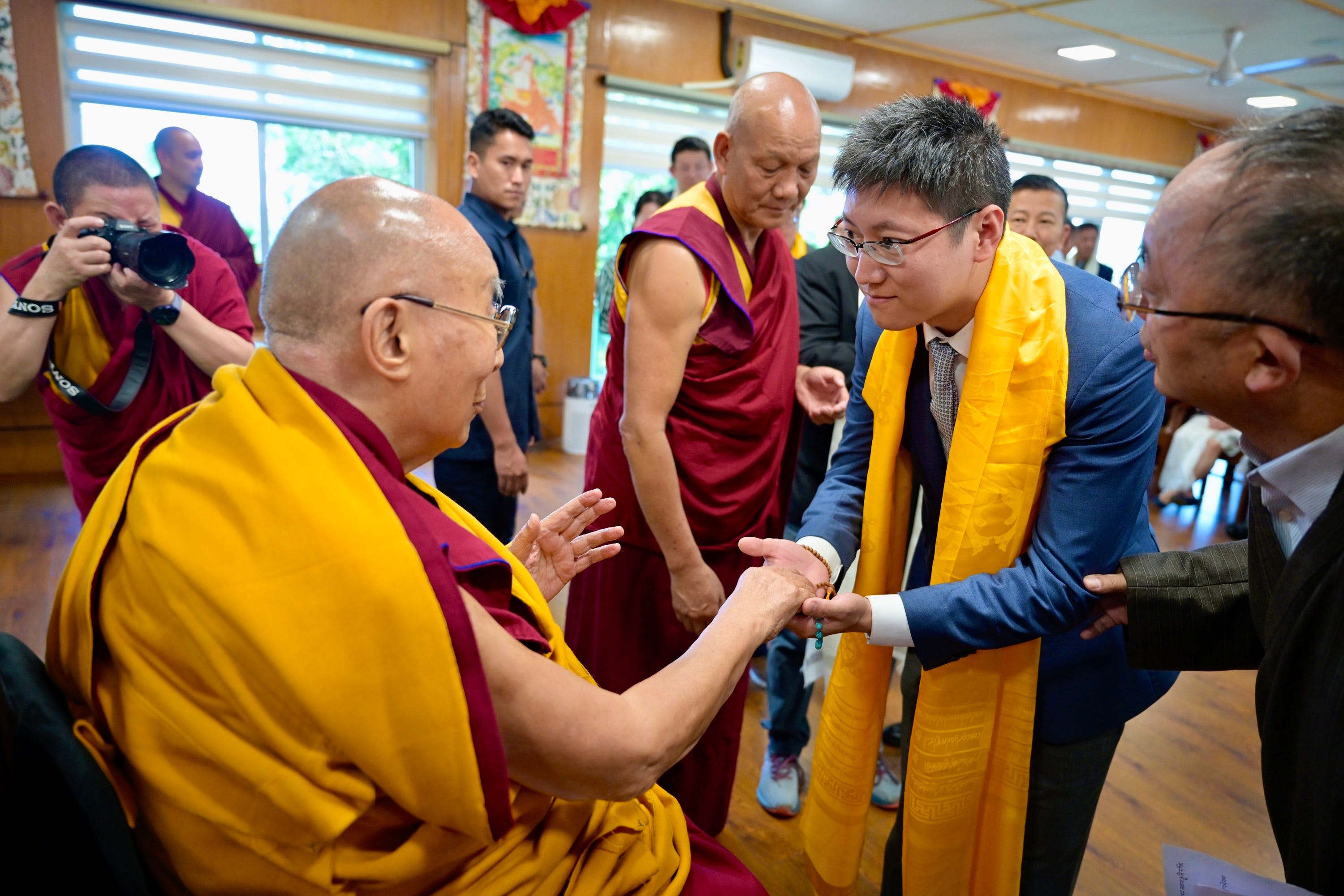
作為一個出生在中國、後來定居海外的華人,西藏(圖伯特)對我有一種複雜而遙遠的神祕感。
我們這一代人從小接受的關於西藏的知識,很大程度上來自中國官方敘事:舊西藏的農奴制度、所謂「和平解放」、民主改革,以及共產黨給西藏帶來的現代化。
但這一次來到印度達蘭薩拉,親眼接觸流亡藏人社區,參觀他們的學校、博物館、檔案館和文化藝術機構,並有幸見到達賴喇嘛尊者,讓我第一次如此近距離地看到另一面的西藏。
這趟旅程也讓我重新思考一個很基本的問題:究竟什麼才算一個國家真正的現代化?
達賴喇嘛尊者已經九十多歲,卻仍然與我們坐下來交談了相當長的時間。給我印象很深的是,他談到了「平等」和「開放社會」(Open Society)。
他並不認為今天的中國真正體現了所謂社會主義的理想。相比某種口號式的「平等」,他更強調一個開放的社會,一個人可以擁有尊嚴、權利和自由的社會。
他也坦率地說,自己無法預測中國的未來,不知道中國什麼時候才會真正走向自由民主,他很想幫助國境線另一側的人民。
從他的言談之中,我能夠感受到,他依然深深牽掛著西藏,也依然希望能夠回到自己的故鄉。
與此同時,他關心的又不僅僅是藏人。他希望包括漢人、藏人在內,所有生活在東亞大陸這片土地上的普通人,有一天都能夠真正擁有做人最基本的權利,而不是永遠由一個不受約束的權力決定個人的命運。
而這次達蘭薩拉之行,真正給我衝擊最大的,不僅僅是達賴喇嘛本人,還有流亡藏人在六十多年中所建立起來的整個社會。
過去我對於這些了解得很少。真正來到這裡以後,我才意識到,在極其有限的條件下,藏人已經進行了幾十年的政治和社會制度建設。
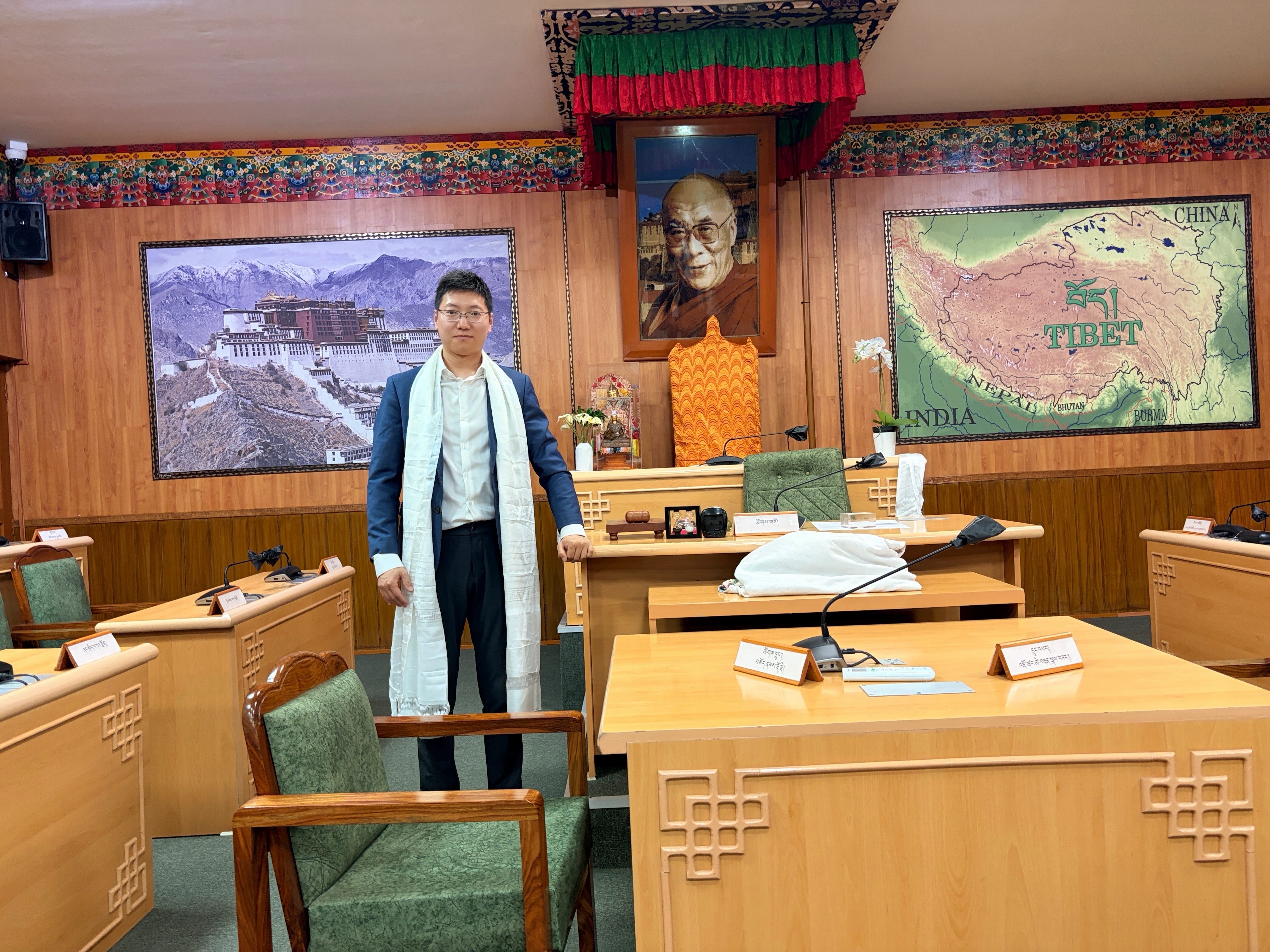
達賴喇嘛逐漸退出政治權力,流亡藏人社會實現政教分離;他們建立了自己的行政體系和議會,有選舉,有公開辯論,有制度化的政治參與,也建立起教育、醫療和基本社會保障體系。
當然,這套制度遠遠談不上完美,達蘭薩拉也不是一個烏托邦。這裡同樣有貧困、矛盾、不滿,也面臨著財政、人口和政治上的現實困難。
但一個失去故土、人口分散、資源極其有限的流亡民族,能夠維持一套正常運作的民主治理體系,本身已經非常難得。
這次我們參觀了博物館、檔案館、學校以及保護和傳承藏族傳統藝術的機構。在那裡,我非常明顯地感受到,他們真正知道一個民族最不能失去的是什麼:語言、歷史、宗教、藝術、檔案、教育,以及一代又一代人對自己是誰的認知。
換句話說,他們知道一個民族的「魂」不能丟。他們保存歷史檔案,整理民族記憶,傳承繪畫、手工藝和宗教藝術,也透過學校讓下一代繼續學習自己的語言和文化。這和今天中國大陸很多所謂「民族文化保護」的方式形成了非常強烈的反差。
在中國,少數民族文化經常被保留為一種可以展示的符號:民族服裝、歌舞、景區、節慶,甚至被包裝成為旅遊資源。
但真正決定一個民族能不能延續下去的東西,例如語言、宗教生活、獨立的歷史記憶以及文化傳承空間,卻在不斷受到限制。
2026年正式實施的《民族團結進步促進法》,再次把「中華民族共同體意識」和推廣國家通用語言文字放到了民族政策的核心位置。官方強調這是為了促進交流融合,但對於藏人、維吾爾人、蒙古人等群體來說,真正的問題是:當所有差異都被要求越來越服從於一個統一的國家身份時,一個民族還能夠保留多少真正屬於自己的東西?尤其在今天的所謂西藏「自治區」,藏語教育空間不斷縮小的問題已經受到越來越多關注。
所以在達蘭薩拉看到這些藏人自己建立的文化機構時,我的感觸尤其強烈。他們不是把自己的文化當作一個 showcase,而是真的相信,這些東西如果失去了,這個民族就可能永遠失去自己。
流亡藏人的學校體系過去一個非常重要的功能,就是接收從西藏來到印度的孩子,讓他們能夠接受藏語教育,接觸自己的歷史、文化和宗教傳統。
但今天這種人口來源正在明顯減少。隨著中國政府越來越嚴格地限制藏人出境、跨境和逃亡,能夠來到印度的藏人越來越少。這直接影響到達蘭薩拉整個社區的人口結構,學校也面臨招生越來越困難的問題。
一個流亡社會如果沒有新的年輕人口進入,而原來的年輕人又不斷遷往歐美和其他地區,長期維持自己的學校、文化機構和社會體系都會變得越來越困難。
所以今天流亡藏人面對的問題,已經不僅僅是如何回到西藏,也是如何讓這個共同體在流亡狀態下繼續生存和壯大。
這也更加凸顯出他們過去六十多年所做的事情有多麼不容易。即使財政條件十分有限,他們仍然努力為社區成員提供基本醫療、教育和社會保障。
這讓我自然想到喜馬拉雅山另一邊的西藏。幾十年來,中共為自己統治西藏所提供的一個重要理由,就是舊西藏「落後」「封建」,共產黨則帶來了土地改革、經濟發展和現代化。
毫無疑問,中國改革開放之後的經濟發展,確實改善了包括藏人在內很多人的物質生活。但經濟發展從來不能替代對於政治權利和歷史責任的討論。
從土地改革、大躍進到文化大革命,中國共產黨製造的巨大災難,並不僅僅發生在西藏,而是席捲整個中國。無數普通人的生命、家庭、宗教、文化和基本尊嚴成為政治運動的犧牲品。
一個政權也不能因為後來修了公路、鐵路,蓋了樓,提高了GDP,就要求人們忘記此前發生過什麼。
更值得反思的是中共自己關於「先進制度取代落後制度」的邏輯。如果當年共產黨可以因為舊西藏制度「落後」,就宣稱自己擁有改變西藏政治制度的正當性,那麼今天我們同樣可以反過來問:西藏人民今天擁有真正的民主選舉嗎?能夠自由選擇自己的政治領導人嗎?能夠公開批評政府嗎?擁有充分的宗教自由和語言文化空間嗎?
在達蘭薩拉,一個沒有自己領土、財政資源遠遠少於西藏的流亡社會,卻已經建立了選舉、議會、政治辯論、政教分離、社會福利以及相對完整的文化教育體系。
那麼按照中共自己「更先進的制度取代落後制度」的邏輯,究竟哪一種制度更現代?這恰恰是官方西藏敘事中一個很難迴避的矛盾。
真正的現代化,不應該只用鐵路、公路、建築和GDP衡量,它還應該包括一個人能不能有尊嚴地生活,能不能自由表達意見,能不能選擇自己的領導人,一個民族的語言、宗教和文化能不能真正傳承,以及政府的權力有沒有受到制度性的約束。
從這些角度來看,達蘭薩拉很多制度和社會實踐,至少值得中國人認真看看。
當然,我並不想把流亡藏人社會浪漫化。他們的民主制度並不完善,社區內部也一定存在各種矛盾和問題。
但真正值得尊敬的,不是他們建立了一個完美社會,而是在失去故土、資源匱乏、人口分散的情況下,他們仍然堅持透過選舉、制度、教育和文化傳承來維繫自己的共同體。這也是我認為海外華人尤其值得學習的一點。
藏人行政中央和整個流亡藏人社會六十多年的實踐,提供了一個非常特殊的案例:一個沒有國家機器、沒有龐大財政資源、甚至沒有自己領土的群體,怎樣建立一個 functioning democracy;怎樣維持制度化的政治參與;怎樣保存自己的語言、歷史和文化;怎樣爭取長期的國際支持;又怎樣讓散居世界各地的人仍然對自己的民族和共同體保持凝聚力、向心力和社會韌性。
對於關心中國未來的人來說,這些經驗其實非常有價值。
民主並不僅僅是反對一個獨裁者,也不是喊幾個自由民主的口號。真正困難的是建立秩序,是允許不同意見存在,是學會妥協,約束權力,兼容並蓄,也是建立政治、教育、文化和社會組織,讓一個共同體即使在最困難的時候仍然能夠持續運轉下去。
離開達蘭薩拉以後,我對西藏問題的理解與來之前已經很不一樣。
以前我們總是被教育從「國家統一」「經濟發展」「舊社會和新社會」的框架裡理解西藏。
但當你真正來到這裡,見到一個個具體的人,看到他們的學校、檔案、藝術、宗教和生活之後,你會越來越意識到,西藏問題歸根到底首先是人的問題。
經濟發展究竟能不能取代自由、尊嚴和權利?這些問題並不僅僅屬於藏人。它們同樣屬於每一個中國人,以及每一位香港人、維吾爾人、甚至國族建構更成功的台灣人…
或許有一天,當中國人能夠真正理解藏人為什麼如此珍惜自己的文化、信仰和自由時,我們也會更加理解,我們自己在過去幾十年中究竟失去了什麼,以及未來究竟應該爭取什麼。
這大概就是我這次達蘭薩拉之行以及見到達賴喇嘛尊者之後最深的感觸。
2026年9月8日於新德里
Reflections on Meeting His Holiness the Dalai Lama
As someone born in China who later settled overseas, Tibet had always felt distant to me, almost abstract. Like many Chinese of my generation, most of what I knew came through an official narrative: old Tibet was defined by serfdom and backwardness, the Communist Party “liberated” it, carried out democratic reform, and brought modernization.
My recent visit to Dharamshala changed that perspective.
For the first time, I was able to see the Tibetan exile community up close: its schools, museums, archives, cultural institutions, political structures, and everyday life. Most importantly, I had the privilege of meeting His Holiness the Dalai Lama.
The experience left me with a question that now seems much more important than the slogans I grew up with: what does modernization actually mean?
His Holiness is now over ninety, but he still spent considerable time speaking with us. What stayed with me most was his emphasis on equality and, in particular, on the idea of an “open society.”
He does not appear to believe that today’s China represents the socialist ideal it claims to embody. What he emphasized instead was a society in which people can live with dignity, freedom, and basic rights. He was also candid that he cannot predict China’s political future or know when it may become freer or more democratic.
Yet his attachment to Tibet remains unmistakable. I came away with a strong sense that he still hopes to return to his homeland. At the same time, his concerns are not limited to Tibetans. The broader hope I heard from him was that all people living under Chinese rule, including Han Chinese and Tibetans, should be able to live with basic human dignity rather than under unchecked political power.
But the most striking part of my visit was not only meeting the Dalai Lama. It was seeing what Tibetans in exile have managed to build over more than six decades.
Before coming to Dharamshala, I knew relatively little about the institutional development of the exile community. What I found was a society that, under extremely difficult conditions, has gradually built a functioning political and social system. The Dalai Lama stepped back from political authority. The exile community moved toward a separation between religion and political governance. It established an elected leadership, a parliament, political debate, education, healthcare, and basic social welfare.
None of this is perfect. Dharamshala is not a utopia. There are financial pressures, internal disagreements, demographic challenges, and social problems. But that is precisely why its achievements deserve attention.
A displaced people, without sovereign territory and with limited resources, has still managed to create institutions that function.
That alone is significant.
What impressed me equally was the seriousness with which Tibetans preserve their culture.
We visited museums, archives, schools, and institutions dedicated to Tibetan traditional arts. It became clear that they understand something fundamental: a people can lose much more than political power. They can lose memory.
Language, history, religion, art, archival records, education, and a shared understanding of who they are are not decorative aspects of identity. They are its foundation.
The Tibetan institutions we visited did not treat culture as performance. They preserved historical records, taught traditional painting and crafts, maintained religious and artistic traditions, and used schools to pass language and memory from one generation to the next.
They understand that the soul of a people cannot be allowed to disappear.
The contrast with the official model of ethnic “cultural preservation” in China is difficult to ignore. Minority cultures are often presented through costumes, festivals, tourism, dance, and highly curated public displays. Culture is preserved as spectacle while the deeper foundations of collective identity, including language, religious practice, independent historical memory, and space for transmission, become increasingly constrained.
This is why the direction of China’s current ethnic policy deserves serious scrutiny. The growing emphasis on a unified national identity, the “Chinese national community,” and the promotion of a common national language raises a basic question: when difference must increasingly conform to a single political and national identity, how much real cultural autonomy remains?
What I saw in Dharamshala was the opposite of cultural preservation as showcase.
It was preservation as survival.
The schools we visited also revealed another, more troubling problem. Historically, Tibetan schools in exile received children who came from Tibet to India, allowing them to study in Tibetan and remain connected to their own history, religion, and culture.
That flow has sharply declined.
As Chinese authorities have tightened controls on Tibetans leaving the country and crossing borders, fewer people are able to reach India. This is already affecting school enrollment and the demographic future of the exile community.
At the same time, younger Tibetans who grew up in India often move onward to Europe, North America, and elsewhere. The result is a shrinking community facing an increasingly difficult question: not only how to return to Tibet one day, but how to remain culturally and institutionally alive while still in exile.
That makes what they have achieved even more impressive.
Despite limited resources, the exile community has continued to provide education, basic healthcare, and social support. It has also managed to preserve a political and cultural infrastructure across generations.
Naturally, this raises questions about Tibet on the other side of the Himalayas.
For decades, the Chinese Communist Party has justified its rule in Tibet partly through a historical argument: old Tibet was feudal, unequal, and backward; Communist rule brought reform, development, and modernization.
There is no need to deny that China’s economic development after reform and opening improved living standards for many people, including Tibetans.
But material development does not erase political repression, nor does it settle questions of legitimacy.
The history of Communist rule in China includes land reform violence, the Great Leap Forward, the Cultural Revolution, mass political campaigns, religious destruction, and immense human suffering. These catastrophes were not unique to Tibet. They affected the entire country.
A government cannot build roads, railways, cities, and higher GDP, and then ask people to forget everything else.
More importantly, the Party’s own historical logic creates an uncomfortable contradiction.
If the replacement of an allegedly backward system by a more advanced one was once used to justify Communist rule in Tibet, then the same standard should be applied today.
Do Tibetans now enjoy genuinely competitive political elections? Can they freely choose their leaders? Can they openly criticize the authorities? Can they fully practice their religion? Can Tibetan language and culture develop free from political pressure?
Meanwhile, in Dharamshala, a stateless exile community with far fewer resources has built elections, a parliament, political debate, a separation of religion and governance, social welfare, and a functioning educational and cultural system.
So by the Communist Party’s own logic, which system is actually more modern?
That is not a rhetorical question. It goes to the heart of how modernization should be understood.
Modernization cannot be measured only in highways, railways, buildings, and GDP. It should also be measured by whether people can live with dignity, speak openly, choose their leaders, preserve their language and faith, and hold political power accountable.
By those standards, many of the institutions in Dharamshala deserve far more serious attention than they receive.
I do not want to romanticize the Tibetan exile community. Its democratic system is imperfect. It has internal tensions and serious long-term challenges. But perfection is not the point.
What deserves respect is that a displaced and scattered people, under enormous pressure and with limited means, chose to build institutions rather than rely only on slogans. They chose elections, administration, education, cultural preservation, compromise, and continuity.
There is something here that overseas Chinese communities, in particular, should study carefully.
The experience of the Central Tibetan Administration and the wider exile community offers a rare case study in how a stateless people can preserve political organization, maintain international support, sustain a global diaspora, and retain a strong sense of collective identity without the resources of a conventional state.
For anyone who cares about China’s political future, this matters.
Democracy is not simply opposition to dictatorship. It is not a set of slogans, and it is not only an electoral event.
It is the slow work of building institutions, tolerating disagreement, learning compromise, constraining power, preserving civil society, and creating enough social trust for a community to continue functioning even under difficult conditions.
That may be one of the most important lessons Dharamshala has to offer.
I left with a very different understanding of Tibet than the one I had when I arrived.
For much of my life, Tibet was explained through the language of national unity, development, and the contrast between an “old society” and a “new society.” But once you meet actual people and see their schools, archives, religion, art, institutions, and daily lives, Tibet becomes much harder to reduce to those formulas.
At its core, the Tibet question is a human one.
Can economic development substitute for freedom?
Can prosperity substitute for dignity?
Can a state preserve a culture while steadily reducing the space in which that culture can live?
And who ultimately has the right to decide the future of a people?
These are not questions that belong only to Tibetans.
They belong to everyone from China who has ever thought seriously about freedom, memory, identity, and political power.
Perhaps when more Chinese people begin to understand why Tibetans care so deeply about preserving their culture, faith, and freedom, we may also begin to better understand what we ourselves have lost, and what we may still need to rebuild.
That is the strongest impression I carry with me from Dharamshala, and from the privilege of meeting His Holiness the Dalai Lama.
https://qubopu.substack.com/p/the-fresh-unorthodox-confession-of?r=6wup96&utm_campaign=post-expanded-share&utm_medium=web